
Emergency Air Duct Cleaning Near Me: What Nashville Homeowners Should Do First
If you’re searching for emergency air duct cleaning in Nashville because water, smoke, or something living just got into your ductwork, don’t call the first number that answers and don’t touch the vacuum yet. The right move is to shut the HVAC system off, document what happened, and identify which kind of emergency you actually have. Each one demands a different first response, and doing them out of order costs more than it saves. Here’s the sequence we walk Nashville homeowners through.
First: Turn the System Off Before Anyone Touches a Duct
Shut the HVAC system down at the thermostat and, if you can reach it safely, at the breaker. In a water intrusion or smoke event, this is the most useful thing a Nashville homeowner can do in the first ten minutes. A running air handler pulls smoke particles deeper into the supply plenum, and it pushes humid air across wet duct liner, which is exactly the condition mold needs to take hold. Neither problem is fixed by cleaning later; both get worse.
Once the system is off, keep it off. Don’t run the fan to “air things out.” Don’t run a shop vac over a supply register. And don’t let anyone start a cleaning pass until the source of the moisture or smoke has been identified. We’ve seen duct cleaning scheduled within hours of a storm-related water intrusion, and the honest answer in that situation is that cleaning is premature.
- Water intrusion: system off, moisture documented, drying and inspection before any cleaning.
- Smoke or fire odor: system off, windows opened where safe, HVAC contractor or fire restoration involved if the source isn’t clear.
- Pest contamination: system off, entry point identified before cleaning, because cleaning without exclusion just resets the clock.
- Odor with no water or smoke: usually an infiltration or dead-animal question, not a cleaning emergency.
Triage the Emergency: Four Types, Four First Responses
“Emergency” means four very different things in Nashville ductwork, and treating them the same is where money gets wasted. Here’s how to tell them apart and what each one actually needs.
Water intrusion. This follows a roof leak, a burst supply line, a sump failure, or a storm event that pushed water into a crawlspace or low return. Wet flex duct and wet fiberglass liner are the problem. Cleaning a wet system with a vacuum before it’s dried and inspected doesn’t remove the contamination, it spreads it and locks moisture into places you can’t see.
Smoke and fire odor. Smoke residue clings to duct walls and liner and gets reactivated every time the system runs. Before cleaning, the fire source and any related structural damage need to be assessed. Cleaning smoke residue out of ducts while an active or hidden source is still present is a short-lived fix.
Pest contamination. Rodents, squirrels, and birds find their way into Nashville attic duct runs through gaps at the roof line and foundation. Droppings and nesting material are a health concern, and cleaning without sealing the entry point means you’ll be doing it again.
Odor with no obvious source. This is the one people mislabel as an emergency. It’s usually infiltration or a dead animal in a return, and it needs inspection first. If you’re not sure which category you’re in, call a pro rather than guessing. Call (855) 473-8488 and describe what you’re seeing.
Document Everything Before Cleaning Disturbs the Evidence
If you plan to file an insurance claim, the photos and readings you take before anyone cleans are what protect you. Cleaning removes the visible evidence an adjuster needs. That’s the part most homeowners skip, and it’s the part that’s hardest to recover later.
- Photograph the affected area from several angles before anything is moved or wiped: wet insulation, water staining on ductwork, the source of the leak if you can find it.
- Photograph the registers and grilles where you see soot, debris, or staining.
- Ask for moisture readings on duct surfaces and surrounding materials. A professional should be able to take and record these before any cleaning begins.
- Get an air quality baseline if there’s smoke or suspected mold, so you can measure improvement later rather than just hoping for it.
- Save receipts and a written scope from anyone who inspects or works on the system.
If insurance is likely involved, mention it before work starts. We can work with your insurer, and we’ll document findings in a way that’s useful for a claim rather than just a cleaning invoice.
What a Legitimate Emergency Duct Service Can and Can’t Do in One Visit
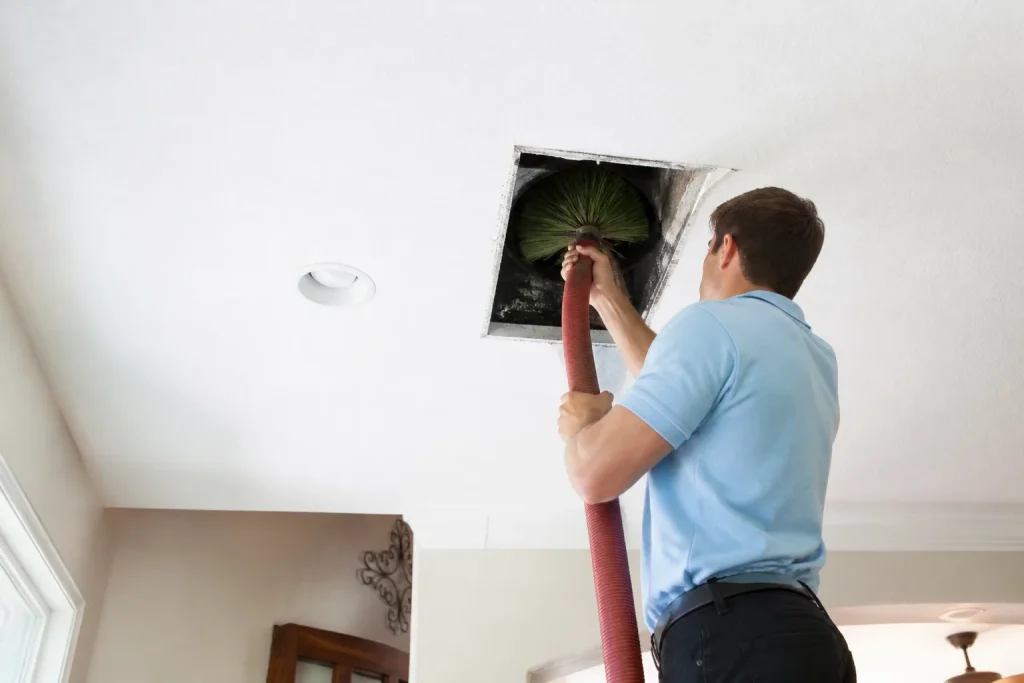
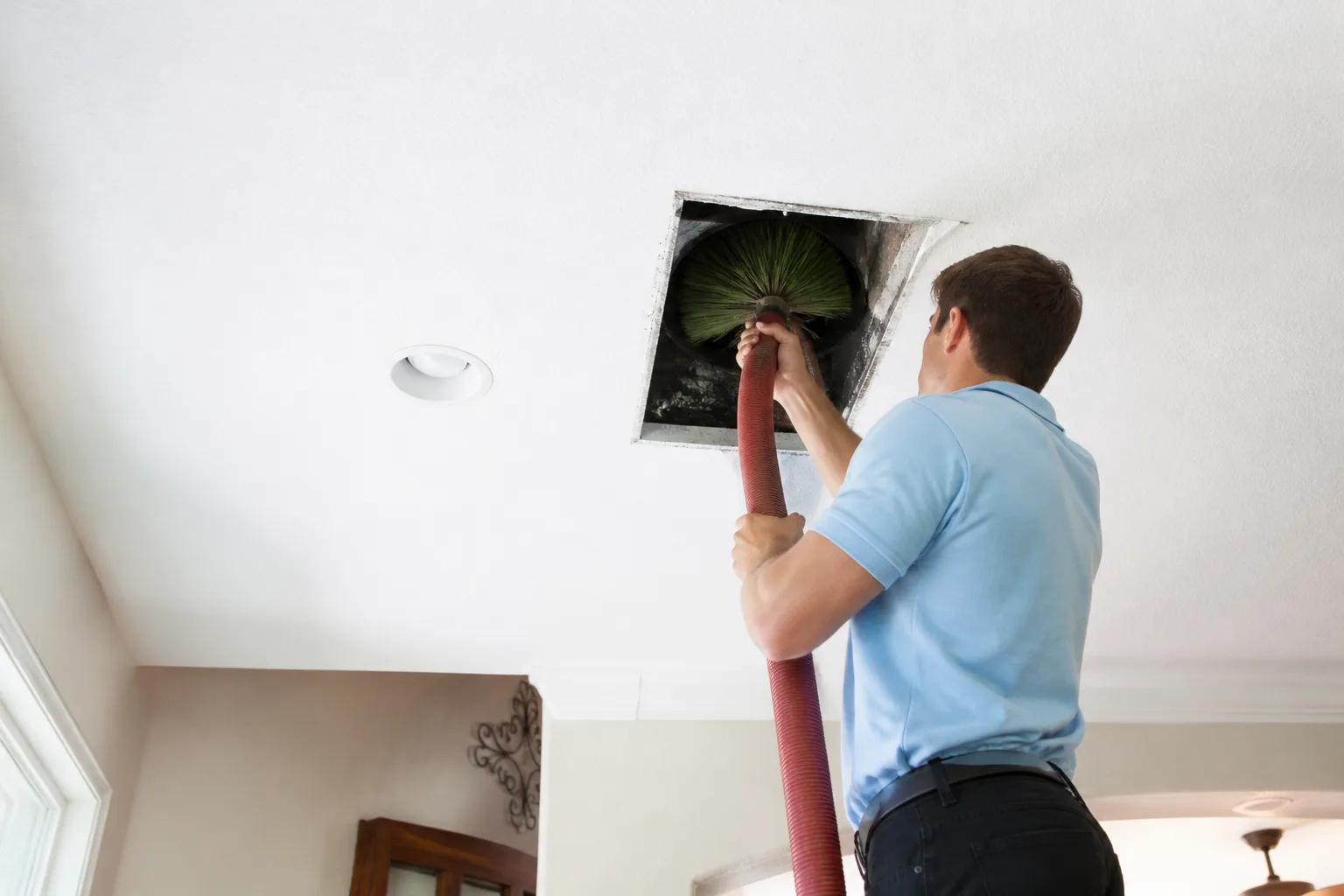
Here’s the realistic scope. A professional duct service can inspect the system, take moisture readings, remove loose debris and contamination, clean accessible duct runs and components, and identify repair needs. With a Rotobrush contact-cleaning system and Nikro tools, the cleaning itself is thorough and verifiable. An Abatement Technologies air filtration setup helps control dust during the work, which matters in homes where someone has asthma or respiratory sensitivities.
What one visit usually can’t do: replace a saturated run of flex duct, remediate a mold colony that has moved into building materials, or exclude pests permanently. Those are separate steps, and a company that promises to handle all of it in a single afternoon is telling you what you want to hear.
That’s also why we offer air duct cleaning and duct repair under one roof. If the cleaning turns up a crushed or disconnected run, we can quote the repair instead of handing you off to someone else. Our technicians have up to 9 years of experience and will tell you plainly when cleaning is premature.
When Cleaning Has to Wait: Remediation First
Knowing when not to clean is as important as knowing how. Some situations require structural remediation, duct replacement, mold treatment, or pest exclusion before a cleaning pass is useful. If a professional recommends any of these as a first step, that’s a good sign, not an upsell.
- Wet flex duct and saturated liner: removal and replacement is often the right call. Mold takes hold in wet liner fast, and cleaning it doesn’t fix a moisture problem that’s still active.
- Visible mold growth on duct surfaces or surrounding materials: treatment and remediation come first, cleaning after.
- Pest entry points that are still open: exclusion first. A sealed, pest-free system stays clean; an unsealed one doesn’t.
- Structural water damage: if the roof or crawlspace is still leaking, the ducts can’t stay dry.
Air you can trust starts with ducts you can verify. That means documenting moisture and air quality, fixing the source, and only then running a cleaning pass you can photograph and show to a homeowner.
Related Services in Nashville
Duct emergencies often surface alongside other ventilation problems. If your dryer is taking two cycles to dry a load, that’s a fire risk worth addressing with dryer vent cleaning before it becomes an emergency. If you suspect a crushed or disconnected run causing air loss, air duct repair resolves it. For a broader look at the full scope of duct services, see Duct Cleaning Nashville, and for a sense of how we work in the area, read about Nashville.
What happens when you call
- 1
A real person answersNo phone trees – you reach a local pro.
- 2
You get an upfront price rangeHonest numbers before anyone is dispatched.
- 3
A background-checked tech heads outLicensed & insured, dispatched right away.
- 4
You approve before work beginsNothing starts until you say go.
The Bottom Line
Most duct “emergencies” in Nashville are won or lost in the first hour, and the winning moves are boring: shut the system off, document what happened with photos and moisture readings, identify whether it’s water, smoke, pests, or plain odor, and accept that cleaning may need to wait behind remediation. A truthful scope beats a fast one.
If you’re in Nashville and need help, Duct Cleaning Nashville offers free estimates. Call (855) 473-8488. We answer 24/7. Fast dispatch from 7am to 7pm, Sunday through Friday. One flat price per system is agreed before work starts, and you get before-and-after photos of your own ducts. Professional-grade equipment, not big-box vacuums.
Frequently Asked Questions
You shouldn’t clean wet flex duct. Saturated liner and flex sections typically need to be removed and replaced, because moisture in those materials is where mold establishes. Drying and a moisture inspection come first; cleaning only happens once the system is verified dry and the source is fixed.
Sometimes. Coverage usually depends on the cause: sudden water intrusion from a storm or burst line often qualifies, while long-term neglect typically doesn’t. Photograph the damage and get moisture readings before cleaning, and we can work with your insurer on documentation.
Cleaning can remove smoke residue from accessible duct runs and components, but removing the source of the odor and assessing any structural damage come first. If a hidden smoke source is still present, cleaning won’t resolve the smell. Call (855) 473-8488 and describe the situation so we can advise on sequencing.
Ask for before-and-after photos of your own ducts and a written scope of what was cleaned. A legitimate provider documents the work rather than just invoicing it. With one flat price per system agreed before work starts, there’s no bait-and-switch, and no per-vent surprises.
Written by the team at Duct Cleaning Nashville.
Need Air Duct Cleaning Help?
Call Duct Cleaning Nashville - licensed & insured, with free written estimates in Nashville.
(855) 473-8488