
Last updated November 15, 2026
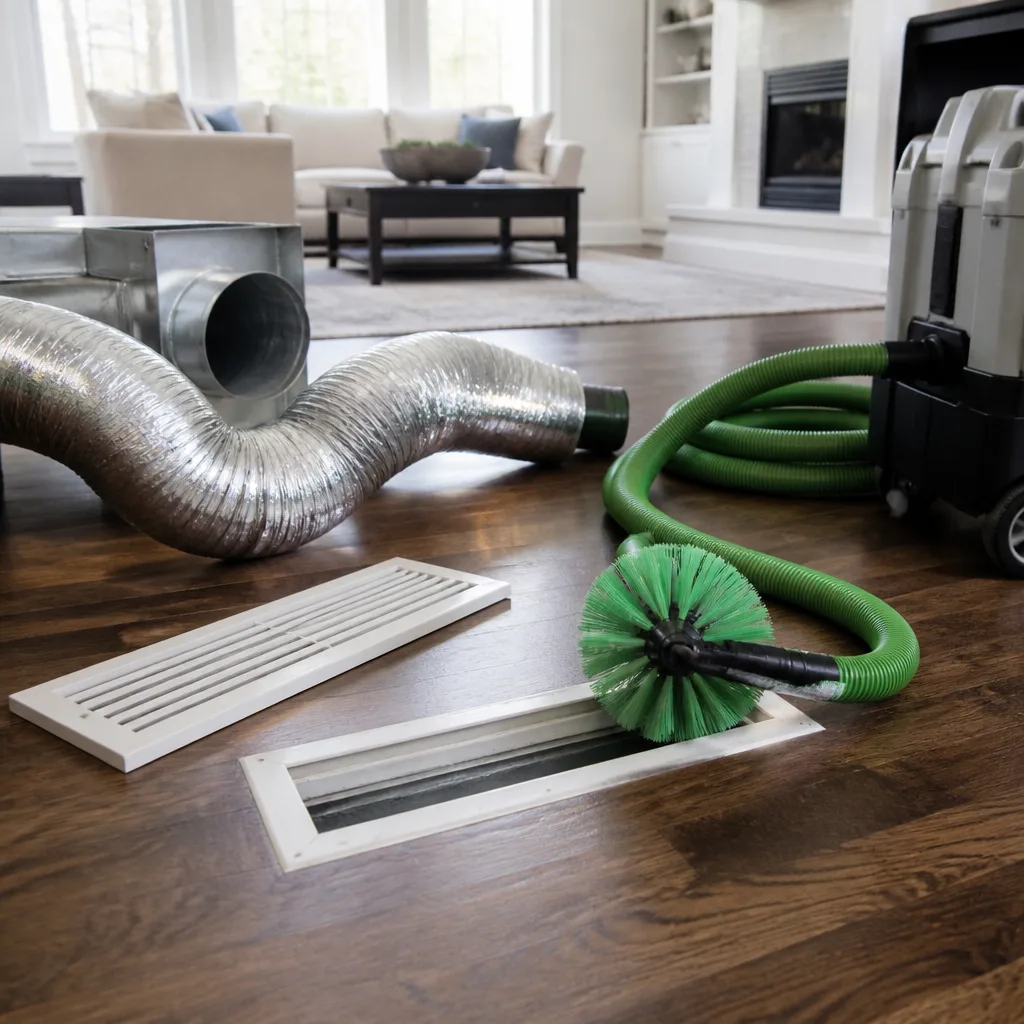 Whole-home duct cleaning
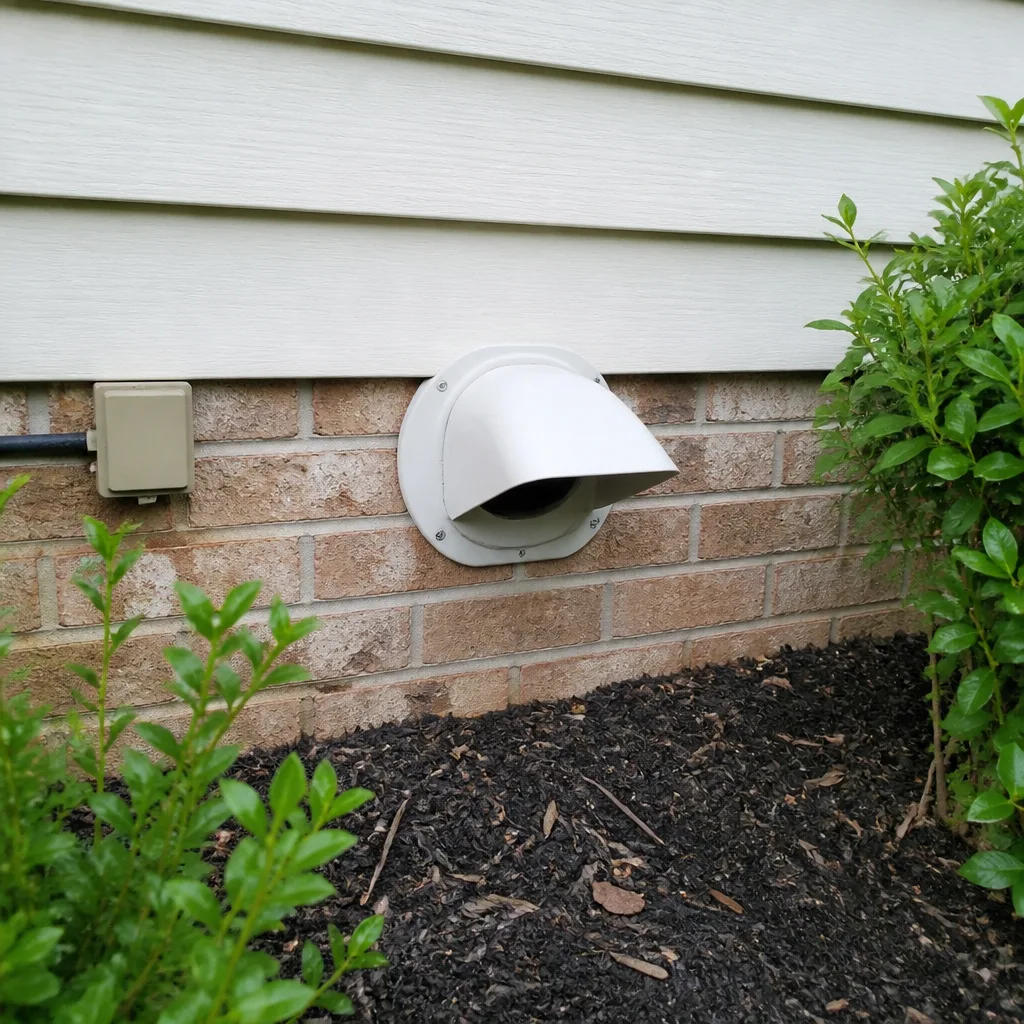 Dryer vent cleaning
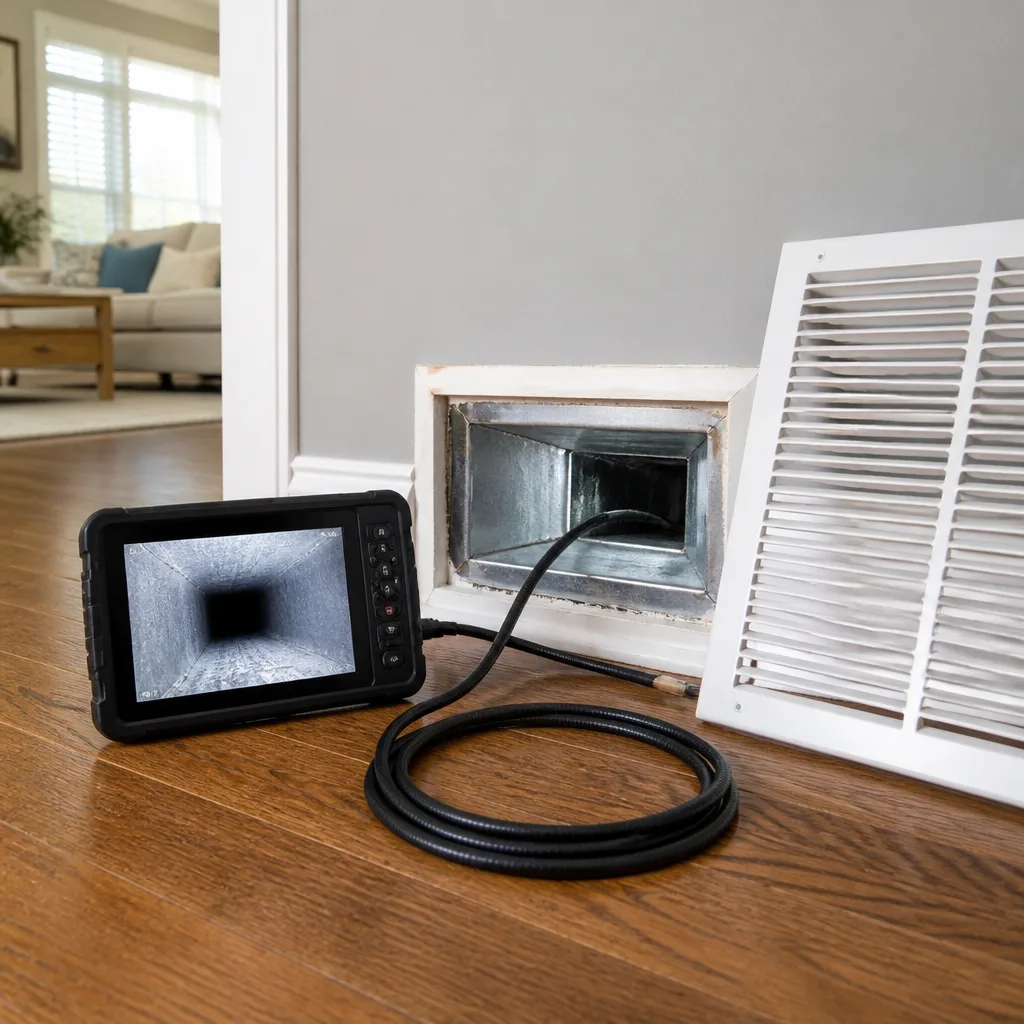 Camera inspection
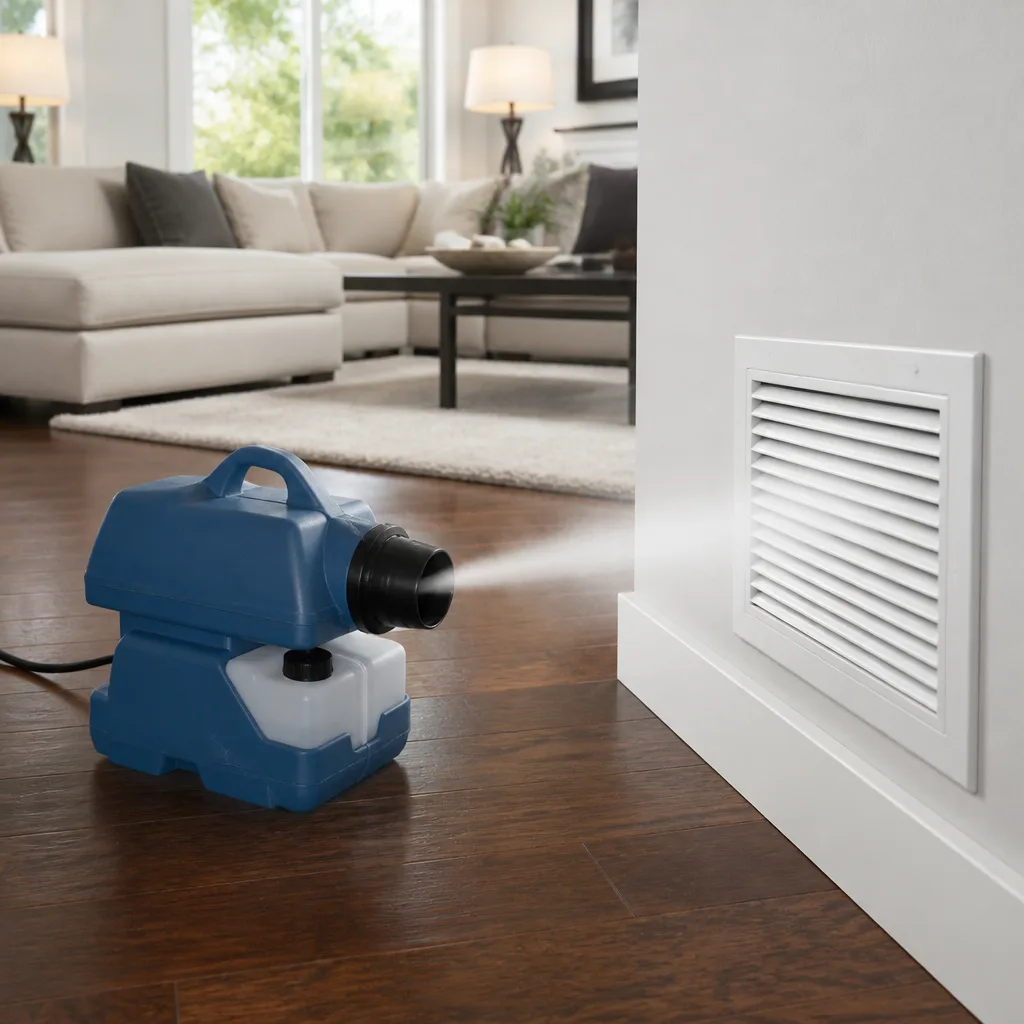 Sanitizing & deodorizing
Whole-system duct and dryer vent check with before-and-after photos - you see exactly what came out of your vents
That "$99 whole-house special" is a bait ad - the real number appears once they are in your hallway, or the "clean" is a shop-vac at the register. We photograph the inside of your ducts before and after instead.
Seasonal Air Duct Cleaning Care for Nashville: Year-Round Homeowner’s Guide
Most homeowners in Nashville treat duct cleaning like a spring chore, the indoor equivalent of mulch and gutters. That schedule feels tidy, but it misses the season that matters most. Nashville’s late summer, with its stretch of humid, heavy air and air conditioners running hard through August and into September, is when moisture and particulate settle into duct liner and start a slow biological chain reaction. By the time the first cool snap arrives, the inside of your ducts has already logged its worst months. This guide walks through what each Nashville season actually does to a duct system, when a professional cleaning does the most good, and the simple things you can do between cleanings to keep the system from drifting out of balance.
Quick Answer
For most Nashville homes, the best time to schedule a professional air duct cleaning is late summer or early fall, after peak air conditioning use and before the furnace starts circulating settled dust. That timing targets the contamination Nashville’s humid summers create. Spring cleanings are common, but they tend to land before the worst of the season rather than after it.
Styles & brands we work with
- Whole-home duct cleaning
- Dryer vent cleaning
- Camera inspection
- Sanitizing & deodorizing
Table of Contents
- What Each Nashville Season Does to Your Duct System
- When to Schedule a Cleaning in Nashville
- A Season-by-Season Homeowner Checklist
- How Nashville’s Storm Season Affects Duct Seals
- Getting the Most From Your Filter in Each Season
- Humidity, Moisture, and Growth Inside Ducts
- What to Watch at Home: A Seasonal Health Check
- When Cleaning Is Not Enough: Duct Repair in Nashville
What Each Nashville Season Does to Your Duct System
Nashville runs through four fairly distinct seasons, and each one loads the duct system differently. Understanding the pattern is the difference between maintaining ducts and guessing at them.
Winter is the season of settlement and combustion byproducts. A gas furnace runs for months, and any small amount of incomplete combustion, even from a well-maintained appliance, contributes trace gases that pass through the return air stream. Meanwhile, less window opening means dust circulating indoors has nowhere to go. It loads the filter faster and settles into runs, particularly on the return side.
Spring brings pollen, and a lot of it. Middle Tennessee is one of the tougher places in the country to have a nose during tree pollen season, and every open door and window carries that load inside. A running air conditioning system pulls the pollen into the return and onto the filter and into duct lining. Spring also brings storm systems, which we cover separately below.
Summer is the one most homeowners underestimate. Long hours of air conditioning produce condensate, and duct systems in unconditioned spaces like attics sit at a humidity level that encourages biological growth on dust that has already collected. This is the season of compounding contamination.
Fall is the restart season. The first cold evening the furnace kicks on, it blows through a duct system that has sat through a humid summer plus a leaf mold season. That first-run particulate load is real, and it’s why so many Nashville homeowners notice a smell or a dust puff the week the heat comes on.
When to Schedule a Cleaning in Nashville
Late summer to early fall outperforms the conventional spring schedule for most homes in Nashville. The reasoning is simple: cleaning removes what a season left behind, so the ideal moment is after the system has done its hardest work but before a new heating season begins circulating dust through the house.
A practical order of operations:
- Late August to early October: the primary cleaning window. Air conditioning load drops, biological growth pressure falls, and the system gets a reset before the furnace runs.
- March or April: a reasonable secondary window if your home is exceptionally dusty, if you’ve just finished a renovation, or if you moved in and don’t know the system’s history.
- Avoid the middle of peak summer: humid air and heavy particulate mean less is gained from cleaning mid-season than from cleaning at its end.
- Any time after a renovation or a move: drywall dust, sawdust, and construction debris travel into duct runs, and cleaning before the system circulates them through the living space pays for itself.
- Immediately after a major storm event if you noticed debris, water intrusion, or a sudden change in airflow.
If your home has asthma or allergy occupants, the timing matters more. Cleaning after the summer keeps the humid-season particulate out of the air stream going into the cooler months, when windows stay shut and indoor concentration matters most. If you’ve never had the system cleaned, it’s worth scheduling a professional air duct cleaning inspection regardless of season.
A Season-by-Season Homeowner Checklist
These are the routine tasks that stretch the life of a professional cleaning in Nashville’s climate. None require special tools.
Winter
- Change the filter every 60-90 days, more often if you have pets or a wood-burning fireplace.
- Check that the furnace isn’t producing any smell on first start; a musty or acrid smell warrants a call.
- Walk the house and note register dust visibility, especially on return grilles.
Spring
- Change the filter at the start of pollen season, not after.
- Keep windows closed on high-pollen days if you have allergy-sensitive occupants.
- After any significant storm, look at registers for debris or dust patterns.
- Inspect exterior vent and dryer vent caps for damage.
Summer
- Replace the filter on schedule; humidity raises filter load as the system works harder.
- Check the filter and register surfaces for any sign of black spotting or musty smell.
- Keep interior humidity reasonably controlled with ventilation or a dehumidifier if the house runs humid.
- Watch for condensation at registers on very humid days; this is a signal to inspect.
Fall
- Change the filter the first week the furnace runs.
- Vacuum or wipe register grilles before turning on the heat.
- Schedule the professional cleaning if you haven’t in the last two to three years.
- Have dryer vent cleaning done before the heating season, since the dryer will run more in colder months.
How Nashville’s Storm Season Affects Duct Seals
Spring and early summer bring severe weather through middle Tennessee, and storms do more to a duct system than most people realize. Wind-driven rain finds its way into exterior vents, loose attic penetrations, and any gap where ductwork meets the building envelope. Sudden pressure swings during a storm can expose weak duct seals in ways that calm weather never does.
What to watch for after a significant storm:
- Exterior vents that look bent, displaced, or missing a screen.
- Water staining on attics or around register boots.
- A sudden dust odor or a musty smell the week after a storm.
- Reduced airflow in one part of the house that wasn’t reduced before.
- Loose duct tape or sealant visible in the attic or crawl space.
Storm damage to ducts usually shows up as a leak. That matters for two reasons. A leaky duct system loses conditioned air into an attic, which is a real energy cost, and it also draws unconditioned attic air, insulation particles, and whatever else settled in there into the living space. If a home had storm damage followed by a seasonal change in indoor air quality, a duct inspection is the sensible next step. We use Abatement Technologies filtration equipment on inspection visits when a home has had water intrusion or elevated dust, since the same category of equipment gets used in remediation work.
Getting the Most From Your Filter in Each Season
For most Nashville homes, the right filter schedule is seasonal, not fixed. Filters clog faster during pollen season and during high summer AC runtime. Spring and summer, expect 30-60 days between changes. Fall and winter, 60-90 days is workable in a typical household.
What we see in the field is that filter grade matters as much as frequency. A filter that’s too restrictive strains the blower; one that’s too thin lets particulate straight through. A mid-grade pleated filter in the MERV 8 to MERV 11 range handles most homes, and the right call depends on your system. If you’re choosing a filter, talk to whoever maintains your HVAC equipment, then adjust the change frequency based on what the filter looks like when you pull it out.
One quick tip for extending the life of a professional cleaning: keep spare filters on hand and change on a schedule you’ll actually remember. A note on the calendar at the start of the heating season and the start of the cooling season is enough.
Humidity, Moisture, and Growth Inside Ducts
Nashville’s summer humidity is the single biggest seasonal threat to duct interiors. Here’s why. Air conditioning creates condensate. That condensate has to drain, and on a hot, sticky day, the inside of a duct sitting in an attic or crawl space can hold enough moisture to sustain biological growth on accumulated dust.
That growth doesn’t appear overnight. It builds through the summer, which is why the seasonal timing of cleaning matters. Cleaning at the end of summer removes the accumulated material before the humid season hands off to winter, and it lets a professional inspect the duct liner for any sign of growth or standing moisture.
Practical priorities for the humid months:
- Confirm the condensate drain is running freely; a slow drain keeps moisture in the system.
- Keep interior humidity moderate; if rooms feel clammy, ventilation or a dehumidifier is worth considering.
- Watch for condensation on register grilles on the stickiest days of July and August.
- Address any musty odor quickly, especially after a wet spring or a storm.
If a home has had water intrusion, mold concerns, or occupants with respiratory sensitivity, our approach is to inspect before cleaning. When remediation-level care is warranted, we deploy Abatement Technologies equipment because it’s the same category used in construction and mold remediation work. That’s a different level of filtration than a consumer vacuum, and it’s part of why we lean on professional tools like the Rotobrush contact-cleaning system and Nikro cleaning tools on every job.
What to Watch at Home: A Seasonal Health Check
You don’t need an instrument to track duct health. A homeowner with a notebook and a flashlight can track the same signals a technician reads in the field. Here’s what to watch through the year:
- Filter load rate: how quickly the filter goes from clean to visibly gray. A sudden change in load rate is the earliest signal something changed in the system.
- Register dust: wipe a register grille with a paper towel and note the amount. Increases over weeks are worth a peek behind the grille.
- Odors: musty, dusty, or acrid smells on startup are diagnostic. A “first run” smell in the fall that fades in a minute is common; a smell that persists is a call.
- Airflow: how quickly a room cools or warms. A change in one room only usually points to a duct issue.
- Condensation and moisture: any beading of water at a register, especially in July or August.
- Visible debris: anything other than light dust inside a register boot.
Write these down at the start of each season. It’s the single most useful thing a homeowner can do to know when to schedule a professional visit, and it lets us see the pattern rather than guess at one. If you want to look through our Nashville service pages or ask about a specific reading, we’re glad to help.
When Cleaning Is Not Enough: Duct Repair in Nashville
Not every duct problem is a cleaning problem. Disconnected runs, crushed flex duct, torn liner, and failing seals all circulate air from the wrong place. Cleaning a system with a hole in it rarely fixes the underlying issue; the debris comes back, and the conditioned air keeps leaking out.
Signs a duct system needs repair, not just cleaning:
- One room that never feels right no matter what the thermostat says.
- Visible disconnected or crushed flex duct in an attic or crawl space.
- Dust appearing on furniture or surfaces shortly after a cleaning.
- Air noise at registers or seams, or whistling at any joint.
- High energy use without an obvious HVAC cause.
Repairing ducts is part of what we do, not a referral. That matters because a cleaning company that only cleans will tell you the system is clean and hand off any problem it finds. We inspect during the cleaning, flag what needs repair, and quote the repair in writing. One call covers the ducts, the dryer vent, and any repair the inspection turns up.
For air quality upgrades beyond the duct work itself, we work with brands like Honeywell and Aprilaire systems when a homeowner wants filtration or moisture control added to the system. Those are recommendations made after the inspection, not sales pressure during the visit.
Common Mistakes to Avoid
- Cleaning in spring because that’s what everyone does. Spring cleaning lands before Nashville’s humid summer, which is when the worst contamination actually builds. Late summer or early fall usually does more for the system.
- Judging a duct cleaner on price alone. The gap between a $99 offer and a real job is usually the equipment and the scope. A consumer vacuum and a once-over of visible grilles is not the same job as a full contact cleaning of every run.
- Skipping the filter schedule in favor of a cleaning. Cleaning a system with a clogged filter is a temporary fix. Filter changes are the cheapest tool a Nashville homeowner has.
- Ignoring the first heating-season smell. A dust smell that clears in a minute is common; a musty or acrid smell that lingers is worth an inspection, especially in a home that saw a wet summer.
- Skipping the dryer vent. Dryer vent cleaning is a separate service from duct cleaning, and most homeowners never have it done. It’s a fire-risk reduction task, not an aesthetic one.
- Treating a cleaning as a repair. If one room is uncomfortable after a cleaning, the issue is usually duct integrity, not cleanliness. Cleaning doesn’t seal a hole.
- Ignoring exterior vent condition after storms. Bent or dislodged vent caps let in rain, insects, and debris, and they’re easy to check from the ground.
See the difference
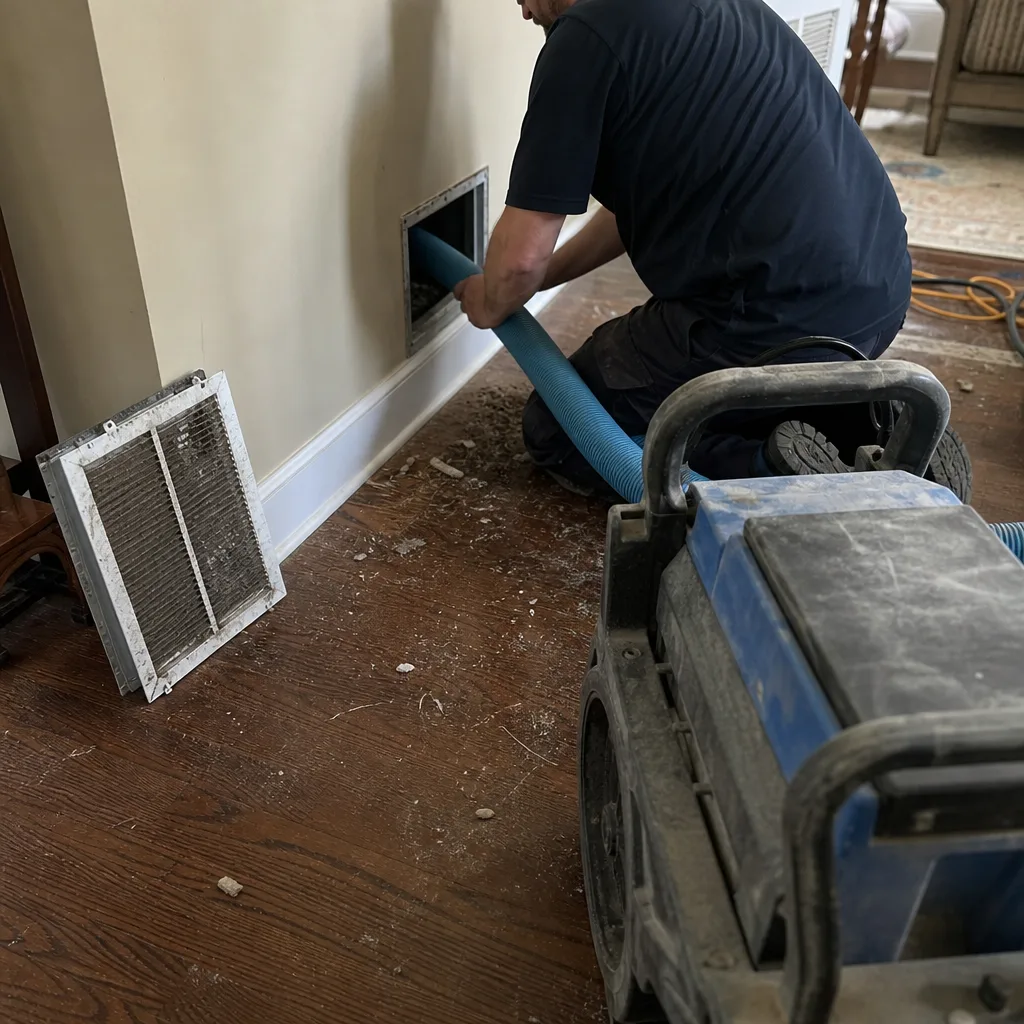 Before
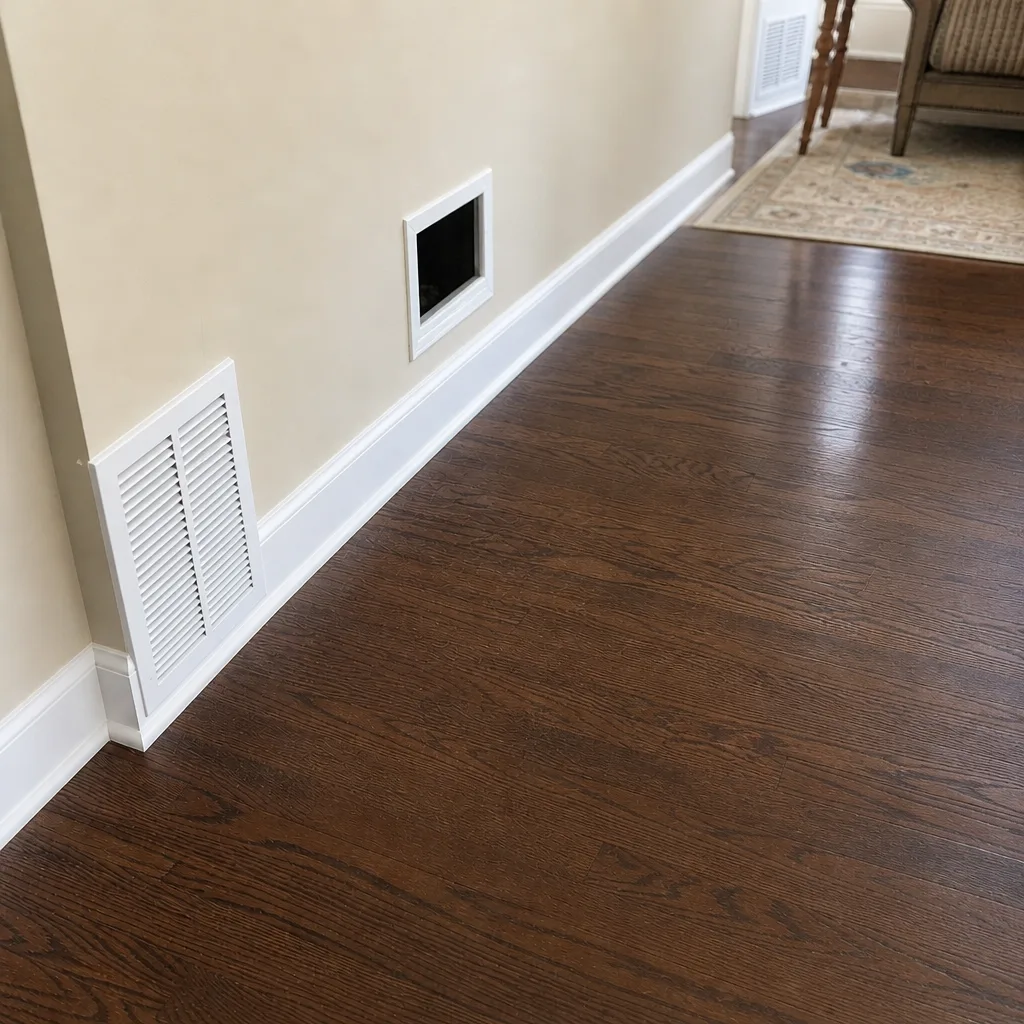 After
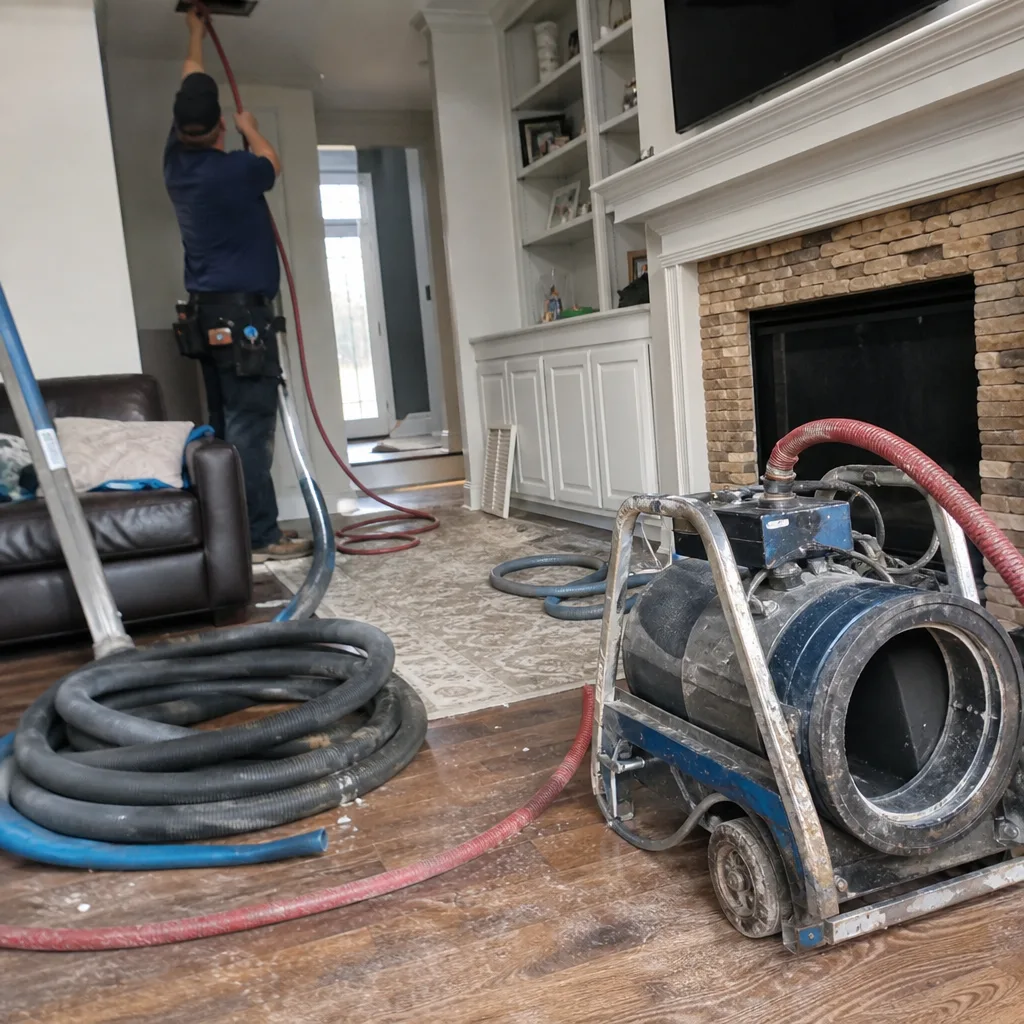 Before
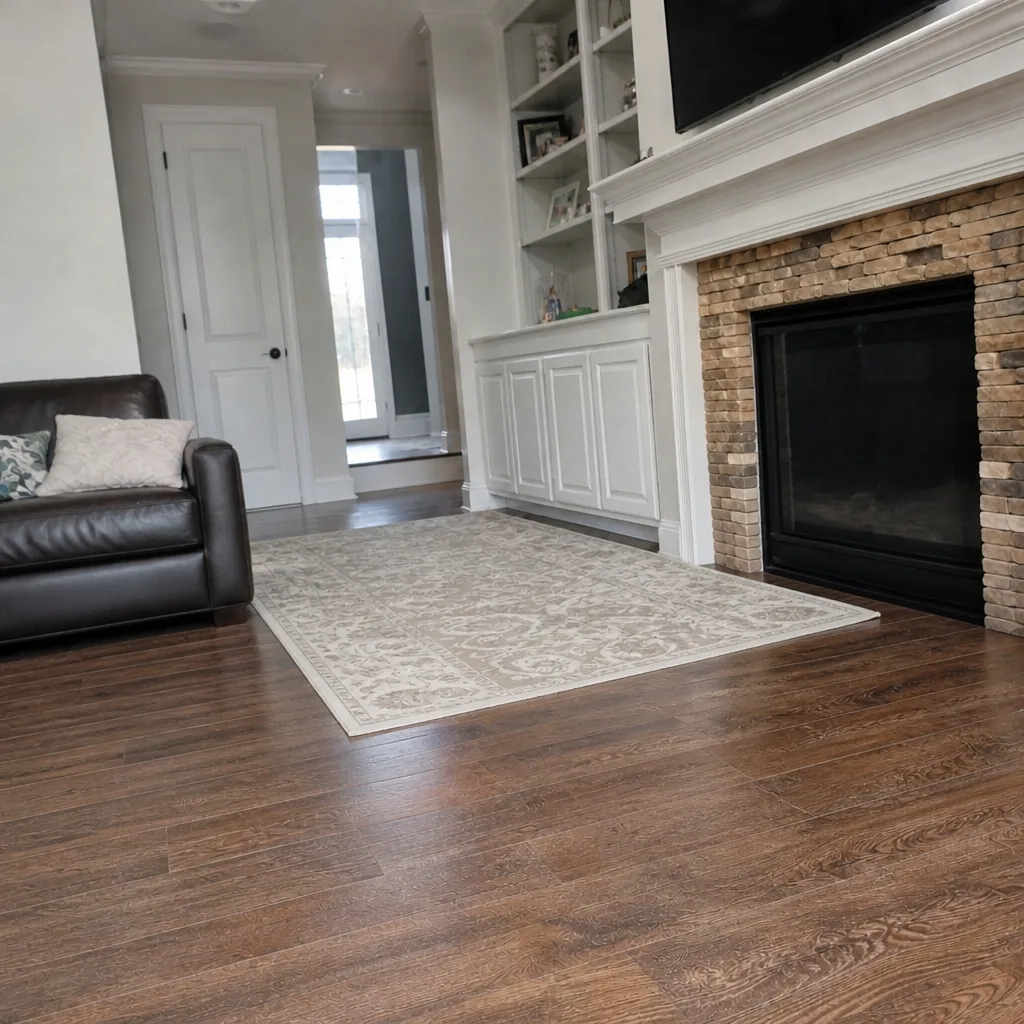 After
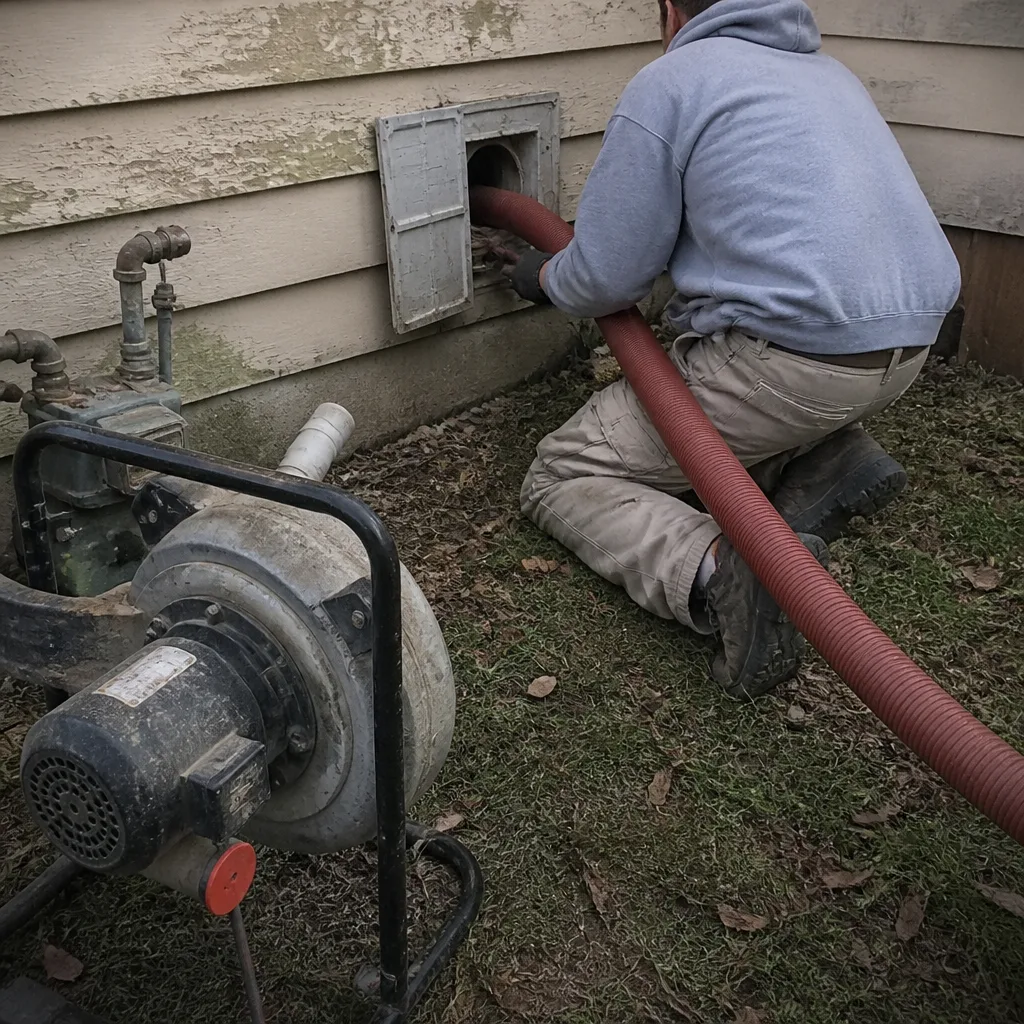 Before
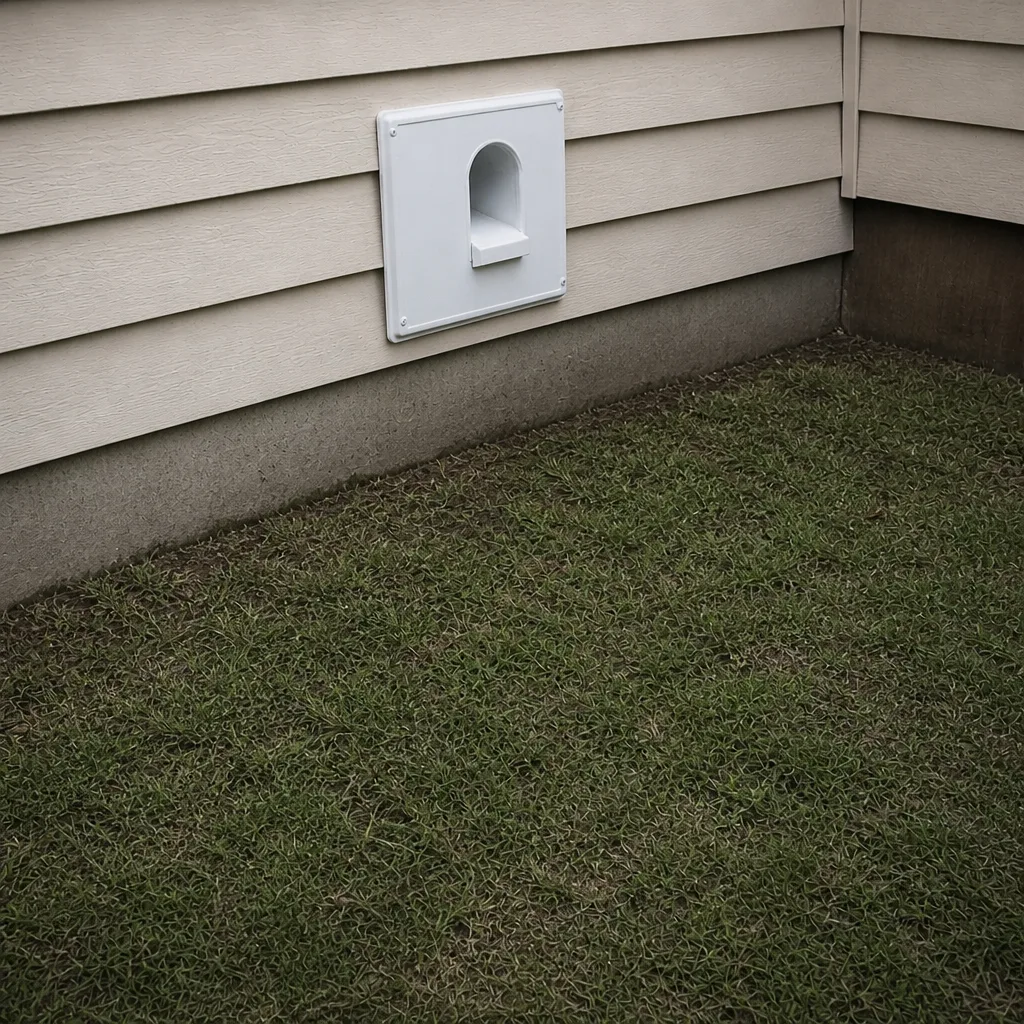 After
When to Call a Professional
Call a professional when the signals stop being seasonal and start being structural. Persistent musty odors, visible debris inside a register boot, condensation at a grille in the middle of summer, a system that hasn’t been cleaned in years or has an unknown history, and any situation with an asthma or allergy occupant all point to a professional visit. The same is true for any home that’s finished a renovation, moved into a new house, or had storm damage that reached the attic or crawl space.
For dryer vents, call if the dryer takes two cycles to dry a load, if lint is visible around the exterior vent, or if the vent hasn’t been cleaned since the home was purchased. For duct repair, call when one room is chronically off-temperature or when you can see a problem in the ductwork itself.
Duct Cleaning Nashville offers free estimates in Nashville. Call (855) 473-8488. We answer 24/7. Fast dispatch from 7am to 7pm, Sunday through Friday.
Frequently Asked Questions
For most Nashville homes, every two to three years is a reasonable interval, with the actual schedule depending on pets, occupancy, allergies, and whether the home has had renovations or water intrusion. Homes with asthma or allergy occupants often do better on the shorter end of that range. If you’ve never had the system cleaned or don’t know its history, start with an inspection.
Fall usually wins in Nashville because it comes after the humid summer that drives most biological growth and most dust accumulation. Spring cleanings are common and they’re not wrong, but they tend to miss the season where the duct system does its heaviest work. Late summer into early fall is the sweet spot. Call (855) 473-8488 for an exact quote and to talk through your home’s timing – estimates are free.
Most homes land in a range driven by system size and the number of runs, and we price per system rather than per vent, with one flat price agreed before work starts. We don’t advertise a teaser price and then add on costs once we’re inside. The written estimate sets the final number, and it’s free. Call (855) 473-8488 for an exact quote.
Cheap quotes usually reflect less equipment, less scope, or both, and the difference shows up in the work. A consumer-grade vacuum with a brush on the end is not the same job as a Rotobrush contact cleaning paired with Nikro tools and professional-grade filtration. Ask what equipment is used and what’s included in the quote. If the answer is vague, the price probably tells the story. Call (855) 473-8488 if you want a written scope up front – estimates are free.
Ask for before-and-after photos of your own ducts, not stock photos, and ask what the technician found and what he did in each area. A real cleaning leaves the system verifiably better, and we’re glad to show it. If you can’t see the difference in the photos, ask for more. Call (855) 473-8488 for an exact quote.
Yes, and it’s the most underrated seasonal factor in this city. Humid summers give moisture time to interact with accumulated dust in the duct system, which is why late-summer cleaning matters more here than in a dry climate. The practical response is to watch for musty smells and register condensation in July and August and to schedule cleaning once the peak passes.
Yes, if it’s been more than a year or two or you don’t know its history. Dryer vent cleaning is a separate service from duct cleaning and one we offer standalone, and it’s the one most homeowners skip. A clogged vent is a fire risk, and it also makes the dryer work harder. It’s worth booking alongside the duct work. Call (855) 473-8488 for an exact quote.
The Bottom Line
Duct maintenance in Nashville is a four-season job, and the schedule most homeowners follow misses the season that matters most. Late summer and early fall are the right window for most homes here, after humidity and air conditioning load peak and before the furnace starts circulating dust. Between cleanings, the wins come from filters changed on schedule, humidity managed during July and August, exterior vents checked after storms, and the signals tracked at home: filter load rate, register dust, airflow, and odors. Cleaning handles what’s in the ducts; repair handles what’s leaking out of them. Our technicians have up to 9 years of experience, and we use professional-grade equipment like Rotobrush, Nikro, and Abatement Technologies on the jobs where it matters. If you’ve been on a spring schedule and it hasn’t really worked, the seasons are making the case for a change.
Call (855) 473-8488 for a free estimate on Duct Cleaning Nashville. We answer 24/7. Fast dispatch from 7am to 7pm, Sunday through Friday.
Written by the team at Duct Cleaning Nashville.